Over the past two years, mandatory food waste collections have become standard practice for many businesses, and household collections are following close behind. The direction of travel is clear. The UK is serious about separating food waste at source and serious about recycling it properly.
But legislation alone does not change behaviour. Infrastructure does. Practical tools do. And that is where food waste liners quietly become one of the most important pieces of the recycling puzzle.
Why is Food Waste Such a Problem?
Food waste is not simply yesterday’s leftovers. It is a £22.3 billion issue. According to WRAP, the UK generates around 10.2 million tonnes of food waste every year. Approximately 58 percent, or 6 million tonnes, comes from households.
Over 6.1 million tonnes of this waste is edible food. A further 2.5 million tonnes consists of inedible parts such as bones, peelings and shells. Together, this contributes at least 16 million tonnes of greenhouse gas emissions annually.
That is not just waste. That is lost resource, lost value and avoidable environmental impact.
The government’s ambition to achieve a 65 percent recycling rate is therefore not cosmetic. It is essential.
The Policy Push Behind Food Waste Collections
After these figures show little improvement year on year, the government knew it needed to take action. DEFRA have introduced the Simpler Recycling Reforms, whilst organisations like WRAP have implemented their own strategies for change. One of which being
The UK Food and Drink Pact (formerly the Courtauld Commitment 2030) sets national goals aligned with the United Nations Sustainable Development Goals. Targets include:
- A 50% reduction in post-farm-gate food waste per person by 2030
- A 50% absolute reduction in greenhouse gas emissions from UK-consumed food and drink (vs 2015 levels)
- 50% of fresh food to be sourced from areas with sustainable water management
Local authorities are essential to achieving these targets. Effective food waste collection, communication with residents, and provision of appropriate infrastructure all play a part in influencing household behaviour.
Why Food Waste Liners Matter More Than You Think
Separating food waste sounds straightforward. In practice, it involves smells, spills and the occasional reluctance from residents who would rather not deal with it at all.
Food waste liners remove friction from the process.
Cromwell Polythene supplies a comprehensive range of EN13432 certified compostable food waste liners suitable for caddies and larger containers. Certified to EN13432 composting standards. This means they’re designed to break down into biomass, CO₂ and water in an industrial composting setting. When it comes to colour, pale green is the most appropriate and widely recognised colour for compostable material. It visually signals compostability and aligns with industry standards, helping to distinguish these bags from conventional plastics. This colour choice supports accurate sorting, encourages participation in food waste recycling, and reduces contamination at industrial composting facilities.
When compostable liners aren’t used, natural (transparent) polythene is the best alternative. Its clarity allows users and collection teams to inspect contents visually, enabling quick identification and removal of contaminants. Unlike green, orange, yellow, or purple liners, which are linked to specific waste streams (such as compostable or clinical waste), the natural colour avoids confusion and cross-contamination risks. Cromwell’s polythene food waste caddy liners are rugged, reliable, made with 30% recycled content and perfect for councils partnering with AD Plants that debag their separated food waste.
The liners support local authority schemes by:
- Facilitating clean and efficient food waste collection
- Reducing contamination in organic waste streams
- Encouraging resident participation through ease of use
- Supporting compliance with regional waste and recycling targets
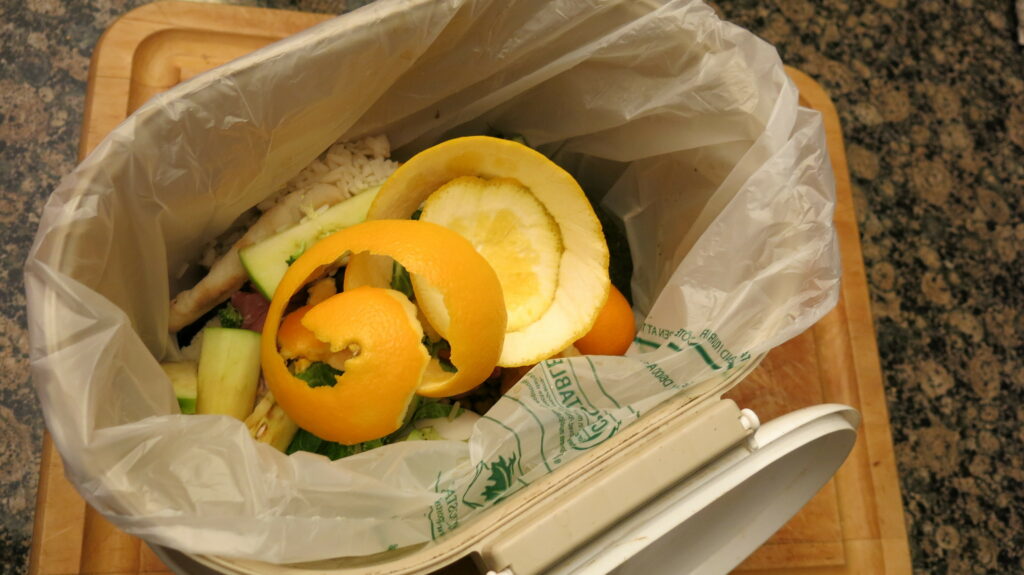
The BPF share that: compostable bags have enormous potential, especially in separate food waste collection schemes and will become progressively more widespread as the demand for sustainable solutions increases. Maintaining and improving both efficiency and quality is key to the entire biological resource industry, using bags certified to EN13432 will help reach both these goals.
This has been proven by many councils, including Medway Council, who stated ‘providing clear labels and educational materials alongside compostable packaging led to a 23% increase in food waste in bins and reduced contamination from 9% to 3%’. A different report mirrors the need for compostable liners, as residents An SBC spokesperson said: “Householders in food waste collection areas are advised that following a significant increase in demand, our stock of caddy liners has now run out and we will now stop supplying free liners.’ – the decsion to stop providing liners, not only faced backlash, but also saw a decrease in participation rates.
Supporting the 65% Target with Practical Solutions
Reducing food waste and increasing recycling rates is not achieved through targets alone. It requires infrastructure, education and practical solutions that fit into daily life.
Food waste liners form part of that solution. By improving hygiene, reducing mess and supporting proper composting processes, they make it easier for households and businesses to do the right thing.
Cromwell Polythene’s compostable food waste liners are designed with resourcefulness in mind. Manufactured to high standards and aligned with recognised certification schemes, they support local authorities in delivering reliable, compliant and effective food waste services.
If the UK is to achieve 65 per cent recycling, every component of the system must work. From collection vehicles to communication campaigns, and from treatment facilities to the humble liner in a kitchen caddy.
Sometimes the smallest details make the biggest difference.