Policymakers are focusing on nutrition, but schools and catering teams may soon face another challenge entirely. Managing the sheer volume of organic waste left behind.
There is a quiet paradox unfolding in school dining halls across England. On one side, a determined push for healthier meals. On the other hand, a potentially growing pile of untouched vegetables sliding into bins and now the government has announced further plans to develop school menus, it seems they may be diverting one issue directly into another!
School Meal Improvement Plans
Schools across England are preparing for a major overhaul of school meals. The aim is clear enough. Tackle childhood obesity, reduce sugar consumption, and improve long term health outcomes.
Deep fried foods are disappearing. High fat favourites like pizza and sausage rolls will no longer dominate menus every day. Sugary desserts are being replaced with fruit for much of the week, while meals built around fresh ingredients and balanced nutrition are becoming the new standard.
Carbohydrate heavy comfort foods are increasingly being swapped for root vegetables, chickpeas, lentils, rice, peas, and other lower calorie alternatives.
On paper, it sounds entirely sensible. Children eating healthier meals is something few would argue against.
But there is another side to this story. If healthier meals are simply scraped into bins untouched, schools may find themselves battling a significant rise in food waste. This results in a greater reliance on effective food waste liners and organic waste management systems.
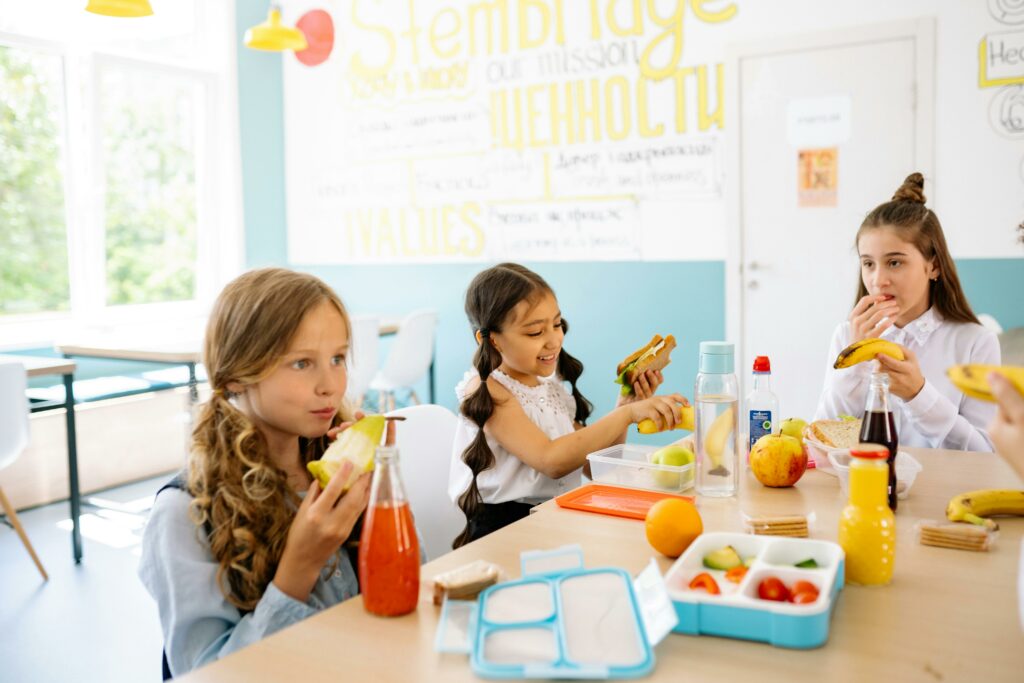
Healthier Menus, Unintended increase in food waste liners used
Children are notoriously cautious eaters. Put chips in front of them and they vanish in seconds. Put cous cous beside them and suddenly it becomes a science experiment.
This reluctance to try unfamiliar foods is already creating a serious food waste problem in schools.
A 2022 study found that primary schools in England generate around 68,000 tonnes of food waste every year. Secondary schools contribute a further 28,000 tonnes. Combined, that is roughly 96,000 tonnes annually.
Compare that with WRAP data from 2011, which recorded just over 80,000 tonnes across both primary and secondary schools combined. That represents an increase of almost 20 percent in little more than a decade.
And here is the crucial detail.
Research suggests vegetables could account for roughly half of all school food waste. The very foods being promoted as healthier choices are often the first to end up discarded.
For schools, caterers, and waste management providers, this creates a growing need for reliable food waste liners that can safely contain organic waste hygienically and efficiently.
A Word From One Who Knows
With opinions divided, we wanted a perspective from someone who sees school food habits every single day.
We spoke to someone who has worked as a primary school cook in North Yorkshire since 1999. Across nearly three decades, they have prepared millions of meals and watched countless food trends come and go.
If anyone understands what children will actually eat, it is probably them.
Q – How have things changed over your nearly 3 decades working in schools?
A – The number of students having school dinners has certainly increased, this is now down to free school meals for Key Stage 1 pupils and those from lower income households. Choice of food has also increased. When i started back in 1999, you only had the choice of one hot meal or a sandwich. Now we have 2 hot meal options, meat or vegetarian, and then sandwiches, a pasta meal and a ‘deli’ choice – typically a jacket potato, sausage roll or something similar. Children have more variety now, but this does, however, mean more waste.
Children now must have some bread and at least 2 types of vegetables a day on their plate. This is a mandatory requirement, so even if the children say they don’t want any vegetables, they must take them regardless. Seems silly really, and as you can imagine, this will only go in the bin!
We are no longer allowed to serve any fried food; all food must be grilled or baked, as it is deemed healthier, which I wholeheartedly agree with. The children like the baked food too, so the can still enjoy the likes of fish fingers, but now in baked form! They go down a treat!
Q – In your experience, what do the kids like and what do they waste?
A – 90% of the children don’t like vegetables. This is definitely the most wasted food in our canteen. However, they do like sweetcorn and baked beans (which fall under the veg category), so wherever I can, I always try to include them on the menu, as I know the children will eat them. The bread is also often wasted, which, just like the vegetables, is a mandatory part of a school meal. We have trialled foods like cous cous before, which the children were very opposed to, calling it ‘bird food’. I think they have too many options, which is causing a lot of confusion and then waste!
The children I feed love to eat pasta, pizza, sausage and mash, chicken dinner, fish fingers, etc. You could say these are more traditional and recognisable foods for them. They often don’t like trying new foods if they don’t recognise the name of the dish. So, my advice: keep it simple!
Q – Will the recent menu changes make it better or worse?
A – In my opinion, worse. Sadly, children don’t really like change and tend to stick to what they know and like; most aren’t adventurous enough to try new things. We have trialled cous cous, chickpeas, and lentils before, and they haven’t been well received; in fact, nearly all of it went to waste. None of the food we serve is currently fried or really ‘unhealthy’, so why do we need to change? My biggest concern is that for some children, this may be the only hot, substantial meal they have that day, and if they are served something that will only go to waste, they will end up going home hungry.
Q – Do you think there is a problem, and what would your solution be?
A – Problem might be the wrong word, I certainly think children should have a balanced diet, and fruit and vegetables NEED to be provided, but choose the right ones! Children should also be encouraged to try new foods too, which is what I think the new changes are trying to do, and make them healthier, but I think it needs to be done on a trial basis. If it doesn’t work, a different but still equally healthy option that children actually like is better than them going home hungry and the food being wasted. Look at the food they do like, and choose that, listen to the kids, and learn from our waste.
We also need to look at the health of children outside the school dinner hall. Obesity and health do not involve food alone; better exercise is also needed. It is rare you see children walking to school these, they don’t often do the sponsored walks like they used to many years ago and often when you do see a child, it is sat behind a phone or tablet screen.
Better eating must be encouraged, there is no doubt, but more exercise is equally important. If we focus on the two hand in hand as a joint project, children’s favourite dinners might not need to be scrapped, just limited.
Why Food Waste Liners Matter More Than Ever
As schools continue adapting to changing nutritional standards, one thing appears increasingly likely. Food waste volumes are set to rise before they fall.
That creates a practical challenge for schools, local authorities, and waste management providers. Organic waste must be collected safely, hygienically, and efficiently, particularly in busy catering environments handling large volumes every single day.
High quality food waste liners help schools manage this process more effectively by:
• Improving hygiene in kitchen and canteen waste areas
• Helping contain wet and heavy organic waste
• Supporting food waste recycling and composting schemes
• Reducing leaks, odours, and contamination risks
• Improving efficiency for catering and cleaning teams
For decision makers responsible for school catering, facilities management, or waste contracts, the focus can no longer be solely on what goes onto the plate. It must also include what happens after the meal is finished.
As food waste legislation, sustainability targets, and school meal standards continue to evolve, choosing the right food waste liners has never been more important.
Cromwell Polythene supplies food and organic waste liners designed to support cleaner, more hygienic, and more efficient waste management across schools, catering environments, and public sector facilities.
To learn more about our range of food waste liners and organic waste solutions, contact the Cromwell team today and discover how we can help your organisation manage food waste more effectively while supporting sustainability goals.