Waste handlers understand the need for specific bags to help capture and contain the rubble, but sometimes the question arises: why do we need two bags?
Extra protection against tears and punctures
Much like all rubble and construction waste, broken asbestos-containing materials can have rough or sharp edges that may puncture a sack during filling or handling. The sharper, bulkier, or more awkward the debris is, the more likely it might tear even the thickest of bags. Placing the sealed inner sack inside a second suitable sack provides a backup barrier if the first layer becomes damaged. It could prevent spills of both rubbish and fibres, avoiding environmental damage.
This does not mean that sacks can be overfilled or used for materials that are unsuitable for bagging, but it does provide additional protection during normal handling and transportation.
Containing contamination on the inner sack
The outside of the inner sack may become contaminated as asbestos waste is placed inside it, particularly when handling dusty material, small fragments, or contaminated disposable protective equipment. Placing the sealed inner sack inside a clean outer sack encloses this potentially contaminated surface, providing a cleaner external layer for subsequent handling and helping prevent contamination from being transferred elsewhere.
The thicker the seal of containment, the greater the reduction in potential contamination – in this instance, two is always better than one.
Why are the two colours important?
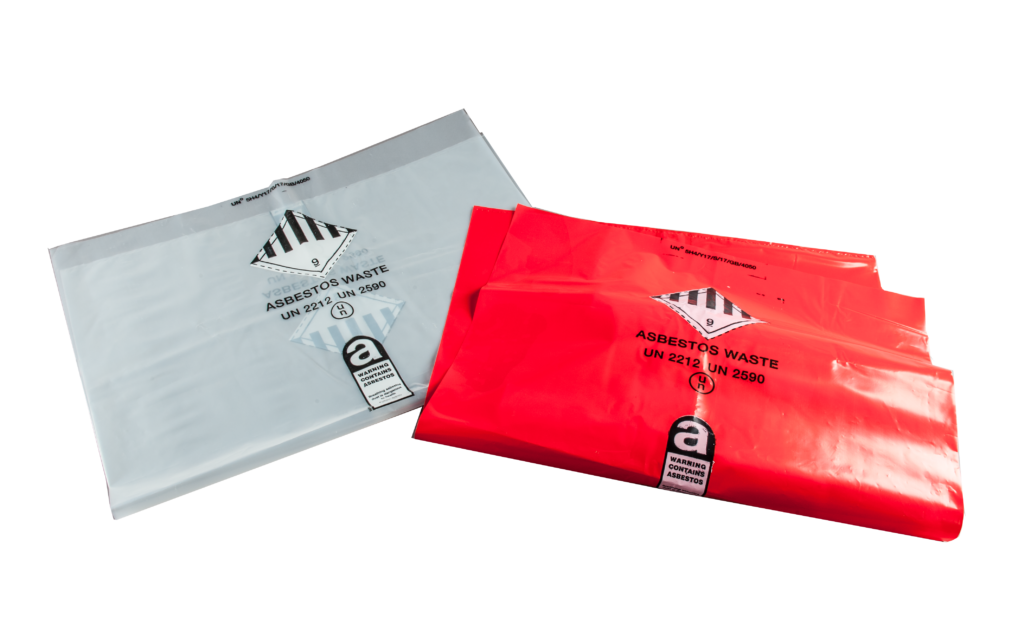
The familiar combination of a red inner asbestos sack and a clear outer sack has a practical purpose as well as making the waste immediately distinctive.
HSE guidance describes standard practice as using a red inner bag carrying asbestos warnings together with a clear outer bag through which the relevant information remains visible. The teams that handle this type of waste know to look for the red sack, and as such it has become a standard across the industry. So if the red colour is the indicator, but a second bag is needed, it must be a natural / clear bag, so it is still easily identifiable at a glance.
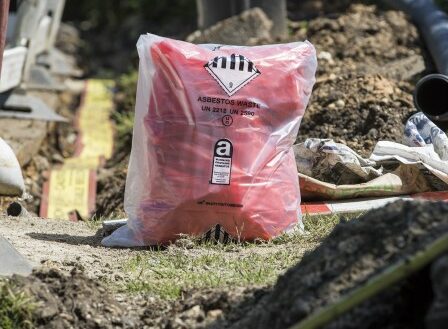
The process therefore involves more than simply placing one ordinary refuse sack inside another. Suitable asbestos waste packaging must provide the necessary containment while carrying the appropriate warnings and information, helping people throughout the waste chain recognise they are handling asbestos waste and take the required precautions. Which is why the red must be used first, followed by the clear sack – adding an invisable layer to the naked eye, but a protective layer to the waste!
Cromwell has you covered!
In the UK, asbestos waste must be securely packaged and appropriately labelled so that it can be identified and handled safely throughout the waste chain, with official guidance referring to asbestos waste being double wrapped and labelled.
Cromwell Polythene supplies both red and clear asbestos waste sacks, providing the two layers needed to support safe, compliant handling of asbestos waste. Designed to help keep hazardous material safely contained and clearly identifiable, they provide a practical solution for organisations that need dependable packaging as part of responsible asbestos waste management.
Contact the team today for free samples or a quote – put our sacks to the test!