Unlike an ordinary bag of general waste, asbestos waste needs a bit of extra thought and attention; in fact, it needs its own waste sack entirely. Asbestos fibres can cause serious and potentially fatal diseases when inhaled, which is why asbestos is classed as hazardous waste and must be carefully contained, clearly identified, correctly packaged and labelled, and handled in accordance with the relevant regulations.
So when it comes to an Asbestos Waste Sack, what specification is the right one?
What is the standard asbestos sack specification?
Asbestos sacks are specifically manufactured to specialist requirements, many stated by law, to ensure the safe capture and containment of the waste to help avoid any hazards. As such it is important you are selecting a bag with the correct specifications.
For many asbestos waste applications, the standard sack measures approx. 600 x 900 mm with a 280 gauge and holds between 50-60 litres. The sack is manufactured from heavy duty polythene, providing the strength required for demanding waste applications. It’s important to remember with Asbestos waste, double bagging is a must, so always ensure you have both the clear and red sacks. HSE guidance states that standard practice is to use a red inner bag with asbestos warnings, followed by a clear outer bag with the appropriate dangerous goods label where required e.g. UN and Class 9 markings. Always remember: Double-bag the waste and label it correctly.
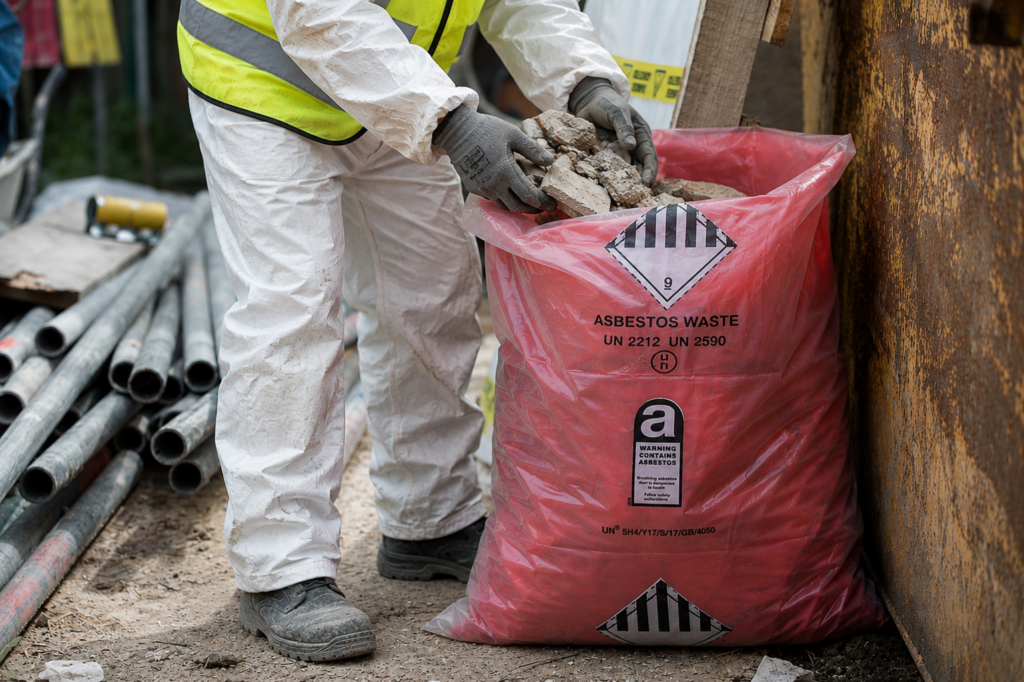
For applications requiring greater capacity, a larger asbestos waste sack is also available, measuring approx. 900 x 1200mm and a capacity of 140L – this gives contractors considerably more capacity for suitable waste while retaining the dedicated asbestos sack format required for safe handling and identification.
Just like the standard size, it is important that you have both coloured bags for double bagging, and that they have all the correct markings, accreditations and warnings. If you are unsure what to look for, read our blog about it.
Why does the thickness of an asbestos sack matter?
A standard Asbestos Sack has a thickness between 50 -70 micron (200–280 gauge)- a profoundly thick bag in comparison to our standard refuse sacks (e.g. BK090C1), which are around 20 micron. But these bags need to be thick, as asbestos waste can include building materials, rubble, and other contaminated items. Some loads can be bulky and heavy, while others may have awkward shapes or sharp edges; therefore, the bag must be strong enough for its intended contents and used correctly, without overloading.
Of course, weight and bulk are just one aspect – the bag also needs to be thick to help contain any hazardous fibers or contaminants. The secure containment of the waste in bag is very important, we need to make sure the bag can securely capture the waste without splits or tears for both ease of transport and safe disposal. In other words, thickness is not just a number on a specification sheet. It affects the sack’s physical performance when it is filled, sealed, moved, and transported.
The right asbestos sack for the job
Asbestos waste requires careful handling from the moment it is identified to the point at which it reaches an authorised disposal facility – so you need the right bag for the job! Whether that is a standard 60L size or for a larger project the 140L bag,
Cromwell Polythene supplies both sizes of asbestos waste sack, with red and clear options available in the correct specifications to help customers safely contain and manage asbestos waste. Why not ask our team for a free sample today, and put our bags to the asbestos test – contact us today on 01977 686868 or email info@cromwellpolythene.co.uk.
Don’t cut corners with hazardous waste – Cromwell are here to help!