Asbestos may have been banned in the UK over 25 years ago, but it remains present in many buildings. As a result, asbestos removal continues to be a specialist job, with strict regulations governing how the waste is handled and disposed of.
One of the simplest, yet most important, safety products used during this process is the humble asbestos sack. Designed to securely contain hazardous fibres, asbestos sacks help protect workers, the public and the environment. But how long have they been around, and why have they remained the industry standard for so many years? Well, to understand why, we must go back almost 100 years, to the invention of the asbestos sack.
The history of asbestos sacks
1931, The first legal requirements
The journey began with the ‘Asbestos Industry Regulations 1931′, which introduced the first legal controls aimed at reducing workers’ exposure to asbestos dust. T,his was when the dangers first became recognised. These regulations required employers to provide impermeable storage sacks for the collection of asbestos waste in factories and warehouses. Although the dangers of asbestos were not yet fully understood, the importance of containing dust and preventing its spread was already recognised. Even back in the 1930s measures were being put in place for the safe containment of asbestos, and this was in the form of a specialist sack to help capture it. This marked the beginning of regulated asbestos waste management in the UK.
1983, The introduction of double bagging
By the early 1980s, growing evidence had firmly linked asbestos exposure to serious illnesses, including mesothelioma, asbestosis and asbestos-related lung cancer. As regulations tightened, licensed asbestos removal became more strictly controlled. Education on the danger of asbestos and the effects on health had become more apparent, and builders and construction workers knew that a better system was needed to contain this waste, to help prevent these health risks. This was when using one bag to contain the asbestos waste was challenged and two became better than one.
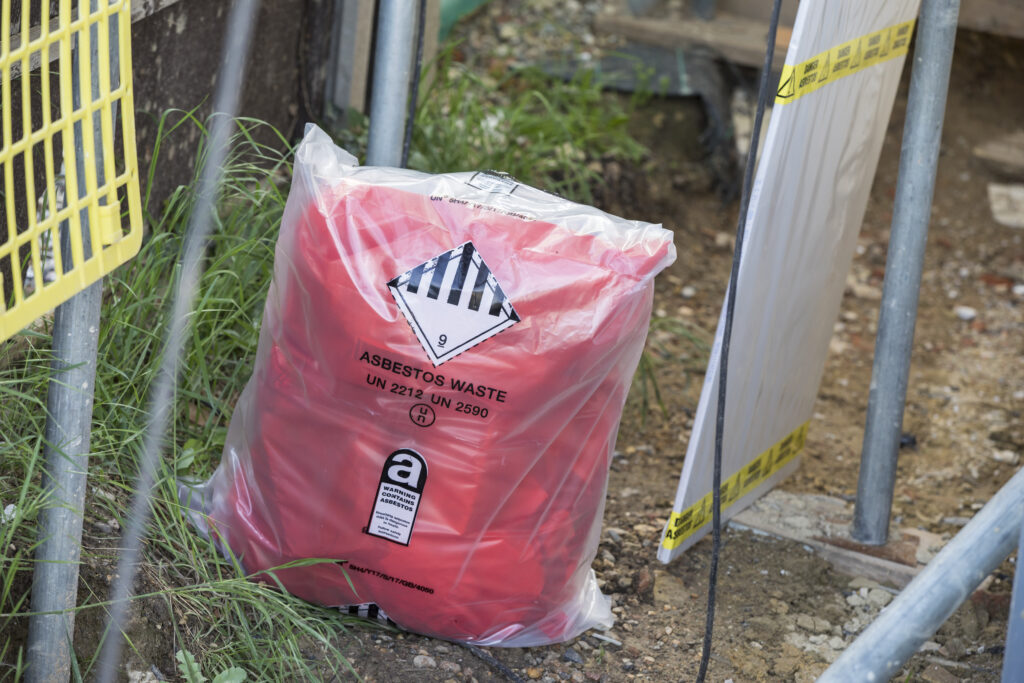
It was during this period that the familiar double bagging system was introduced and is still used today. The red asbestos sack containing hazard warnings is sealed first, before being placed inside a clear outer sack and sealed again.
The extra layer of protection helps ensure that if one bag becomes damaged during handling or transport, the second bag continues to contain the hazardous fibres. ‘Two is better than one’ approach enables safer and better containment, reducing the risks of dangers to the health of those dealing with the waste. Another vital step towards safe waste handling.
Today, Strict regulations remain in place
Although asbestos was fully banned in the UK in November 1999, millions of properties still contain asbestos materials installed decades ago. With regular construction underway on many properties, especially older ones in need of repairs, the risks of dealing with Asbestos always need to be considered.
Today, asbestos waste is classified as hazardous under the Control of Asbestos Regulations. It must be double bagged, clearly labelled, transported by licensed waste carriers and disposed of at authorised hazardous waste facilities.
Because asbestos fibres do not naturally break down, the waste is permanently isolated and buried in specially licensed landfill sites to prevent any future risk to people or the environment – this is their end-of-life solution, the safest option for humans and the environment.
Why are asbestos sacks so effective?
Modern asbestos sacks are specifically designed to prevent dangerous fibres from escaping. Manufactured from heavy duty polythene, they are highly resistant to tearing and puncturing during handling. Once sealed correctly, they create a secure barrier that keeps microscopic asbestos fibres safely contained.
This is particularly important because asbestos fibres are extremely small and can remain airborne for long periods if released. Breathing in these fibres can lead to serious diseases that often take decades to develop. The combination of durable materials, secure sealing and the double bagging system makes asbestos sacks one of the most effective methods of containing hazardous asbestos waste throughout its journey from removal to final disposal.
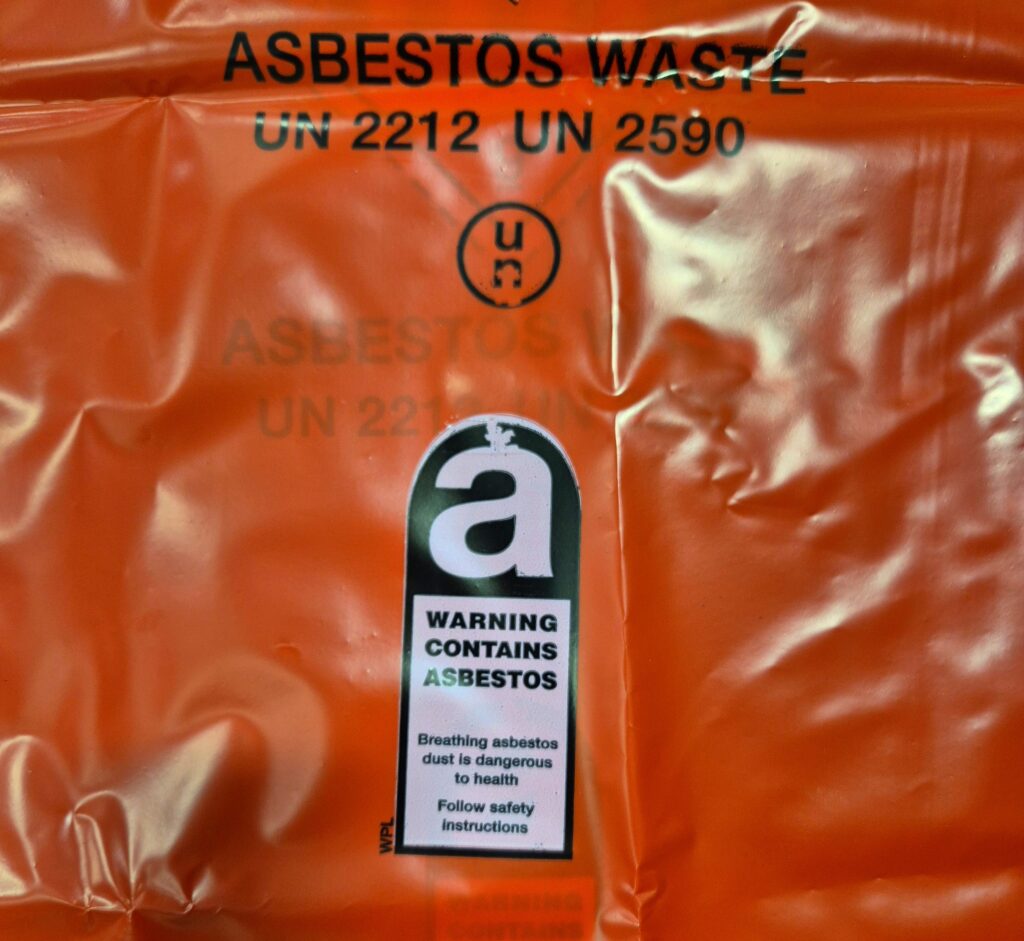
Using two, ultra-thick, specifically manufactured bags is vital for the safe containment of asbestos. A certified asbestos sack significantly reduces this risk by preventing fibres from becoming airborne during collection, transportation and disposal.
A simple product that plays a vital role
At first glance, an asbestos sack may appear to be nothing more than a heavy duty plastic bag. In reality, it is an essential part of a safety system that has evolved over more than 90 years. From the first regulations introduced in 1931 through to today’s strict waste management procedures, asbestos sacks have helped reduce the risk of exposure by safely containing one of the UK’s most hazardous waste materials.
At Cromwell Polythene, we supply robust asbestos sacks manufactured to help contractors safely collect, transport and dispose of hazardous asbestos waste with confidence. Built from durable materials and clearly printed with the required hazard warnings, they provide the reliable containment needed for one of the most tightly regulated waste streams in the UK.