Buying a bag is easy with the right supply poartner. Specifying the right bag across an NHS estate is also just as important.
A liner is not simply something that stops the inside of a bin becoming unpleasant. In a well managed waste system, the bag is part of the segregation process itself. Its colour can identify the stream. Its transparency can expose contamination. Its material can determine whether it is compatible with the next stage of treatment. Its strength and dimensions determine whether it actually survives the journey from ward to waste compound.
Get those decisions right and the bag quietly helps the whole system work. Get them wrong and you have bought a remarkably efficient method of moving contamination from one place to another.
For decision makers purchasing NHS Waste Bags, the useful question should be what is this bin collecting, where is that material going next, and what does the liner need to achieve between those two points?
That is where the specification starts.
The quick answer: match the bag to the waste route
For most nonclinical waste streams, there are four practical starting points.
1. Residual general waste: typically a black refuse sack or appropriately sized bin liner.
2. Dry mixed recycling: usually a natural, clear or white sack where visibility helps identify contamination.
3. Separately collected recyclables: a clear or suitably identified sack can support source segregation, with colour and labelling configured around the organisation’s wider waste system.
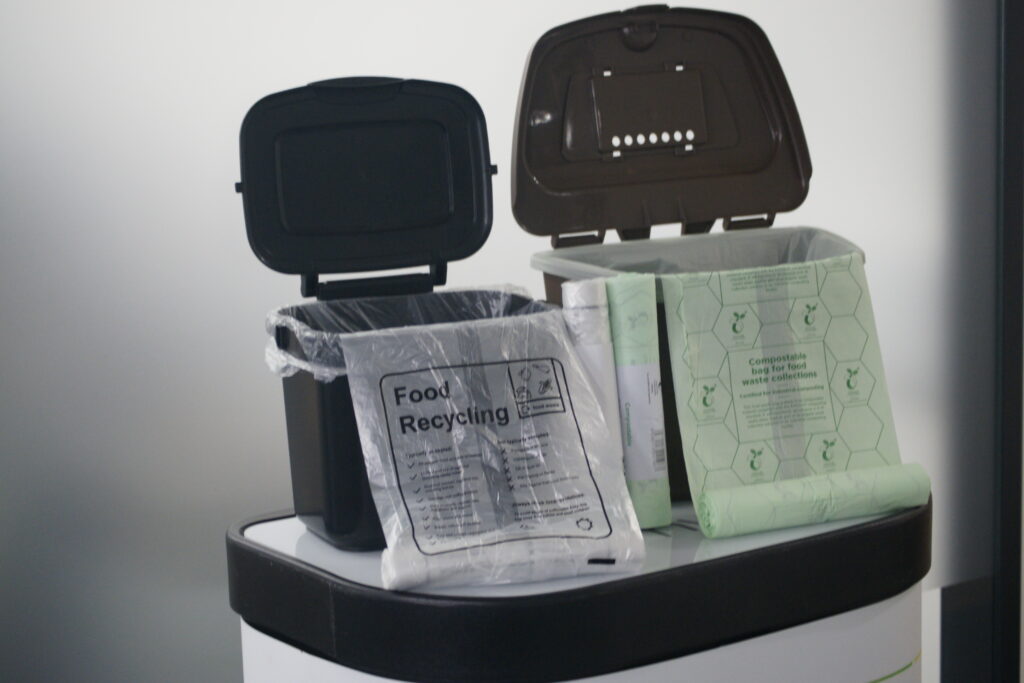
4. Food waste: the liner should be selected according to the destination of the food waste. Where an industrial composting facility accepts certified compostable liners, a suitable compostable bag can travel through the collection route with the food. Where the route is anaerobic digestion, a polythene food waste caddy liner is a suitable option.
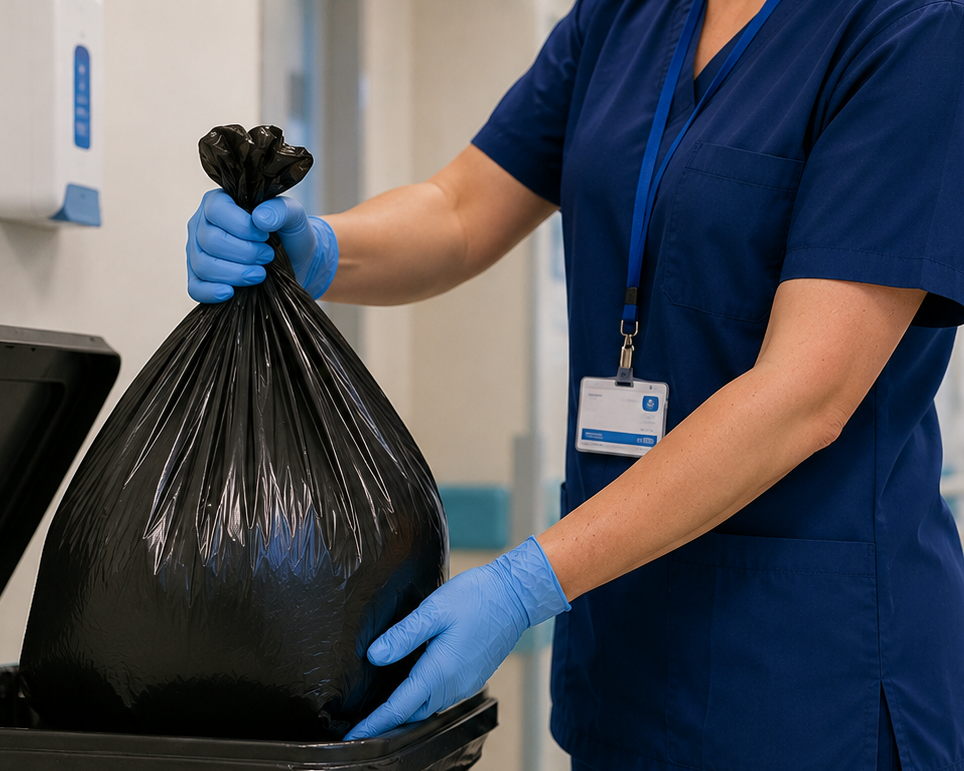
General NHS Waste – Black Bags
Black refuse sacks are familiar across healthcare estates, and familiarity is useful when it reinforces a consistent system.
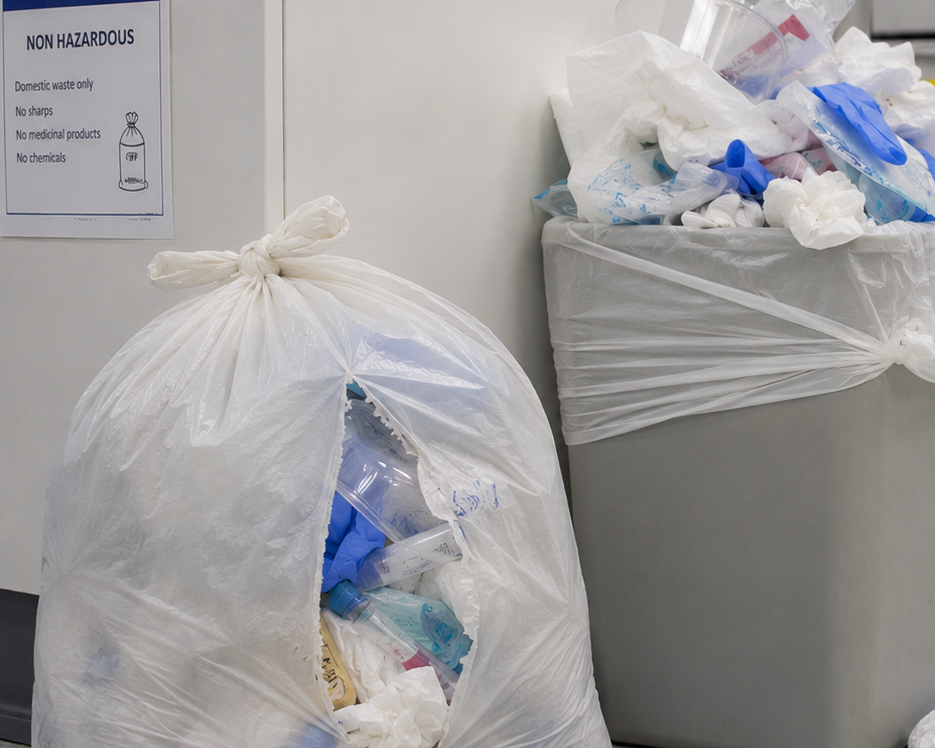
Their job should be to capture genuine residual waste. Typical contents may include crisp packets and confectionery wrappers from the vending machines, contaminated packaging like food containers that cannot enter the recycling stream, broken stationery, nonrecyclable plastics, dust, sweepings and mixed residual materials.
Black bag waste does not automatically mean landfill. Treatment can include energy recovery and other contracted routes, with landfill sitting at the bottom of the waste hierarchy.
Using black bags only for genuine general waste helps prevent recyclable materials from ending up in landfill or energy recovery.
Mixed Recycling NHS Waste – Natural (Clear) Bags
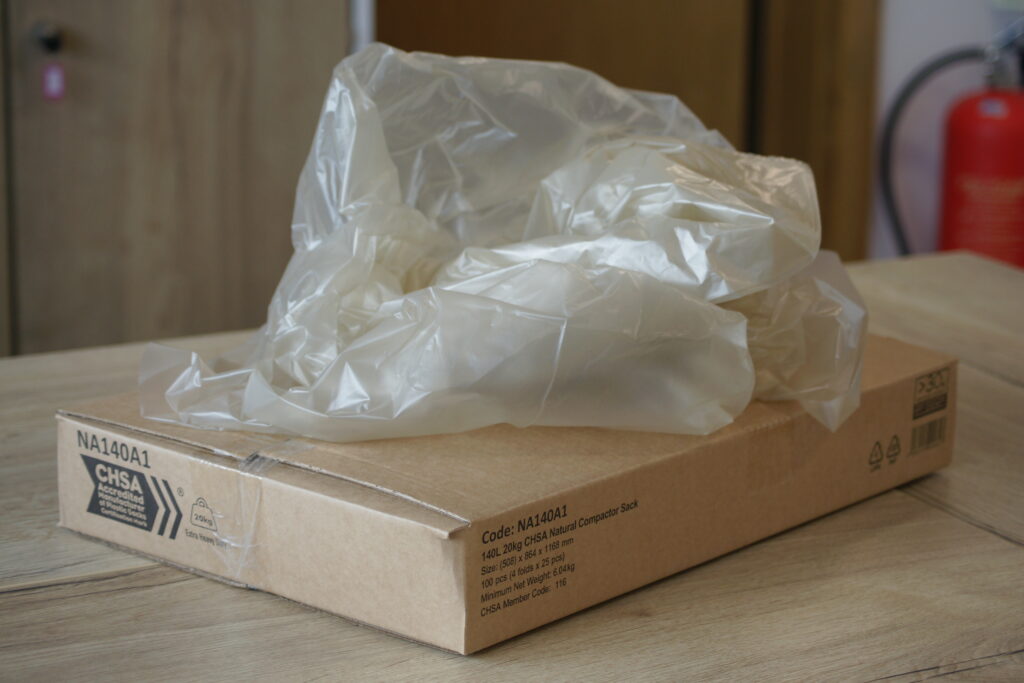
A recycling sack has an unusual job. It must contain the material while making it reasonably easy to determine whether the material should be there in the first place.
That is why natural or clear sacks make so much sense for dry mixed recycling.
A transparent sack gives cleaning teams, porters, waste managers and collection crews an opportunity to spot obvious contamination before the contents travel further through the system. Cromwell’s natural refuse sacks are commonly specified for dry mixed recycling for precisely this reason. The contents remain visible, allowing unwanted material to be identified before the sack enters the recycling process.
Think of it as a very simple quality control window.
An opaque recycling sack can conceal a poor load until somebody opens it or it reaches the receiving facility. A clear sack gives you another inspection point without adding another process.
Typical recyclable contents across healthcare estates can include office paper, newspapers, magazines, cardboard packaging, plastic bottles, drinks cans, clean food containers, tubs and trays where these are accepted by the contracted recycling service.
The operative word is clean.
Healthcare settings generate plenty of material that is technically recyclable before it becomes contaminated. Once food, chemicals, body fluids or other unsuitable material are introduced, the recovery route may change. .
For procurement teams, this makes transparency a functional feature rather than a cosmetic one.
Segregated Recycling NHS Waste – Colour Tinted Bags
Clear does not have to mean completely colourless.
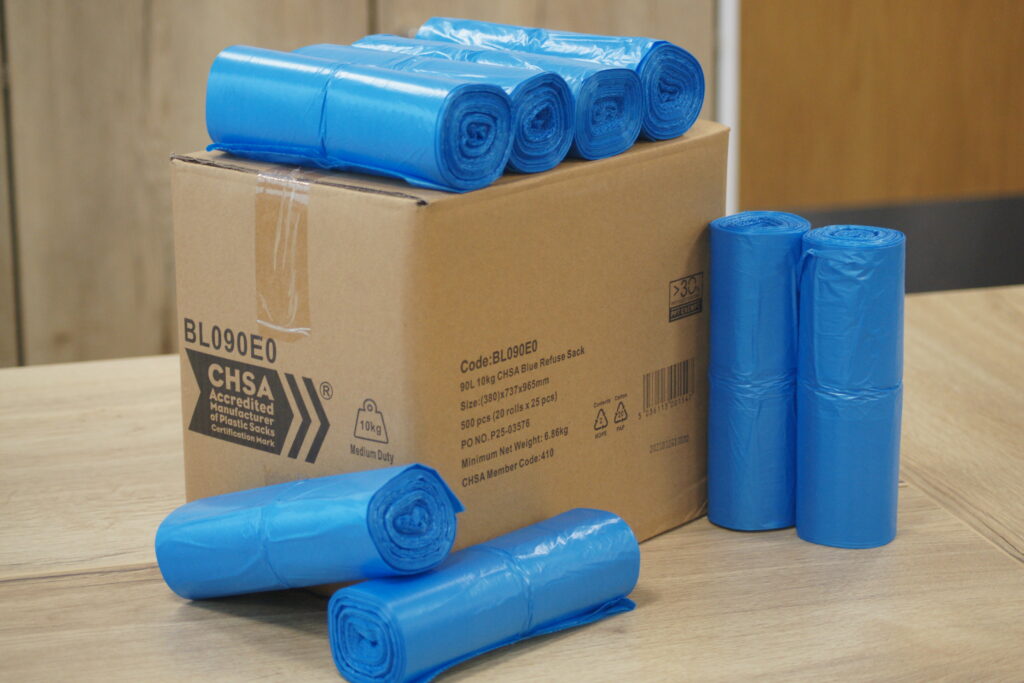
Where an organisation operates several source separated recycling streams, transparent or translucent tinted sacks can provide another visual cue. One recycling point may capture paper and card, another plastics, and another cans or other accepted materials.
The advantage is speed.
Staff should not need to stop and conduct a philosophical investigation of the bin every time they dispose of something. A consistent visual system allows the right behaviour to become routine.
Colour can also help collection teams identify which sack belongs to which stream when multiple materials are being moved through service corridors, loading areas or central waste stores.
There is, however, an important NHS specific consideration.
Healthcare already has an established colour system for clinical and healthcare waste. Any local colour scheme used for recyclable materials therefore needs to work with the organisation’s existing waste policy, signage and contractor requirements rather than creating competing meanings for the same colour.
NHS Food Waste – Caddy Liners
For NHS estates in England, separating food waste is no longer simply good waste management practice. It is now a legal requirement under Simpler Recycling. Since 31 March 2025, workplaces including public sector organisations have been required to separate food waste from dry recyclable materials and residual waste before collection.
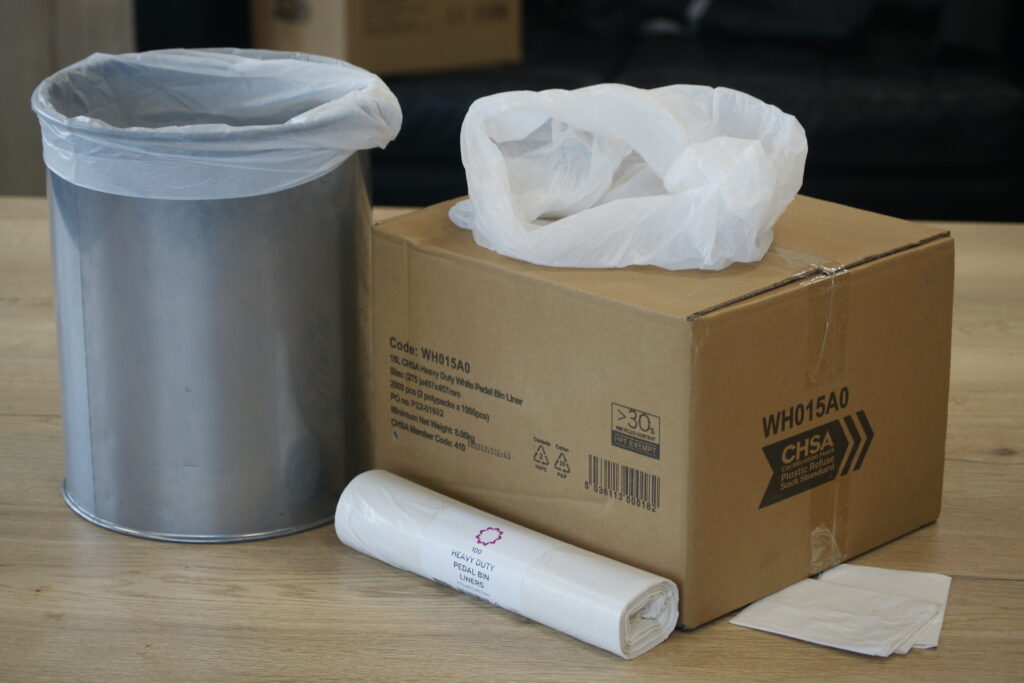
That makes food waste segregation a procurement issue as much as an operational one. Once dedicated food waste containers are in place, the next question is what liner best supports the treatment route.
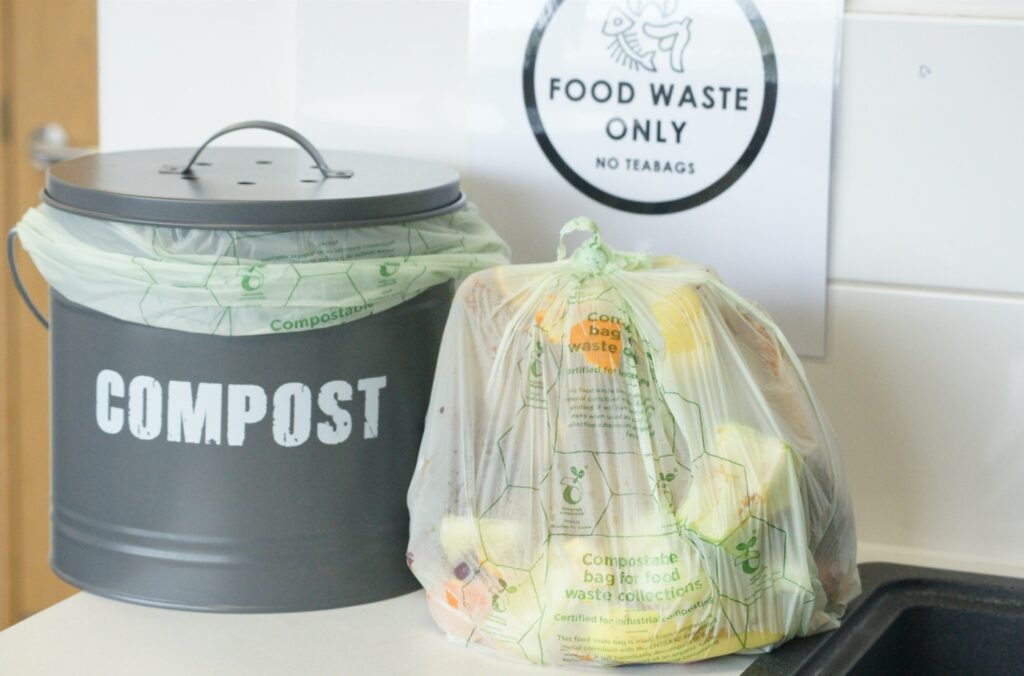
If food waste is being sent to an industrial composting facility, a certified compostable bag can be collected with the food and enter the composting process with it. Cromwell’s compostable food waste liners meet EN 13432 and are designed for industrial composting applications.
If the food waste is being sent for anaerobic digestion, Cromwell recommends using a polythene caddy liner instead.
Anaerobic digestion facilities typically include preparation stages where contaminants and packaging materials are removed before the organic material enters the digestion process. Cromwell’s polythene food caddy liners have been developed specifically with anaerobic digestion collections in mind, providing a durable liner for food waste capture while avoiding issues associated with compostable material entering an unsuitable treatment process.
This is why the destination of the food waste should be established before the liner is specified.
Typical food waste includes plate scrapings, leftover meals, fruit and vegetable peelings, bread, bakery products, tea bags, coffee grounds and out of date food.
Simpler Recycling has made that separation increasingly important across NHS estates. Food waste must now have its own collection route rather than disappearing into the residual waste stream, making the choice of caddy and liner part of the practical infrastructure needed to achieve compliant, efficient segregation.
Bag colour gets attention. Bag specification does the work
Once the waste stream and treatment route have been established, colour is only part of the purchasing decision.
Size matters. Strength matters. Fit matters.
A 90 litre bin filled predominantly with lightweight paper does not present the same challenge as a similarly sized container carrying glass.
Specifying far more material than an application requires can add unnecessary material and cost. Specify too little and split sacks, double bagging and additional handling can quickly remove the saving you thought you had made.
The useful specification is therefore based on the actual load, the bin dimensions, handling process and frequency of collection.
This is particularly relevant across large NHS estates, where the words “refuse sack” can describe very different jobs in an office, ward, kitchen, public area or central waste facility.
One bag does not need to do everything.
It needs to do its particular job reliably.
A Quick Guide to Clinical Waste Bags
While this article focuses on residual waste, it’s important to remember the three main clinical waste bag colours used in healthcare settings:
- Orange Bags – Infectious soft clinical waste suitable for alternative treatment, such as used gloves, aprons, dressings, swabs and masks.
- Yellow Bags – Highly infectious, medicinally contaminated or anatomical waste that must be disposed of by high-temperature incineration.
- Tiger Stripe Bags – Non-infectious offensive hygiene waste, including nappies, incontinence pads and sanitary waste.
Before signing off the next NHS waste bag specification
A useful procurement review can be reduced to seven questions.
1. What waste is the bin actually intended to collect?
2. Is that material residual, recyclable, organic, or clinical?
3. What treatment or recovery route will the collected material follow?
4. Does the receiving facility accept the proposed liner material?
5. Would a clear or translucent sack make contamination easier to identify?
6. Does the sack fit the container and provide the appropriate strength for the typical load?
7. Is the colour and labelling consistent across departments, sites and contracted collections?
Answer those first and the catalogue becomes much easier to navigate.
The right bag makes the right waste stream easier
Waste segregation across an NHS estate is never going to be solved by a bin liner alone.
But the right liner can make the system easier to understand, easier to inspect and easier to operate.
Black sacks give residual waste an obvious home. Natural and clear recycling sacks make contamination visible. Carefully managed colour identification can support separate recycling streams. Compostable liners can complement food waste destined for suitable industrial composting facilities. Clinical colours keep specialist healthcare waste distinct from the rest.
The result is not more complexity.
It is fewer opportunities to get the waste stream wrong.
Cromwell supplies refuse sacks, natural and coloured recycling sacks, compostable food waste liners and specialist clinical waste sacks for healthcare and waste management applications.
If you are reviewing NHS Waste Bags across wards, kitchens, offices or wider healthcare estates, the objective should be simple: specify the bag around the waste stream, collection system and treatment route, rather than treating the liner as an afterthought.
Because the best waste bag is not simply the one that fits the bin.
It is the one that helps the whole waste system work.
Speak to the Cromwell team about your current waste streams and bag requirements, and we can help you identify a practical specification that supports segregation, collection efficiency and reliable day to day performance.