Flexible plastics are everywhere. Bread bags, crisp packets, films and wrappers are part of everyday life. Recycling them, however, is still far from straightforward.
For many residents, flexible plastics cannot simply be added to their usual household recycling. Instead, they may need to be saved and taken to a suitable collection point.
And there lies the problem.
Recycling works best when it is easy. The more inconvenient or confusing the system becomes, the more likely valuable material is to end up in general waste.
Flexible plastic collections delayed until 2030
Mandatory kerbside collections of plastic film and bags in England were originally expected from March 2027 as part of Simpler Recycling.
In July 2026, the Government deferred this requirement until 1 April 2030. Infrastructure was one of the major challenges. Research commissioned by the Local Government Association found that additional collection, sorting and reprocessing capacity would be needed to deal with the amount of flexible plastic entering the system.
The delay gives the industry more time to prepare.
It also gives local authorities an opportunity to answer another important question.
How do you make flexible plastic recycling work for residents?
Addressing resident reservations
When flexible plastic collections were first discussed, residents had some understandable concerns.
What goes in the collection? Which packaging is accepted? Why can flexible plastics not simply go into existing recycling? And where will another container fit?
Few households are crying out for another bin in the kitchen.
That is why the FlexCollect trials were so useful.
The FlexCollect project trialled flexible plastic collections across 10 UK local authorities, reaching around 160,000 households and collecting more than 400 tonnes of flexible plastic packaging.
Earlier research found satisfaction among participating households exceeded 89%, reaching as high as 96% in some areas. Around 60% of households participated regularly.
So what helped turn uncertainty into participation?
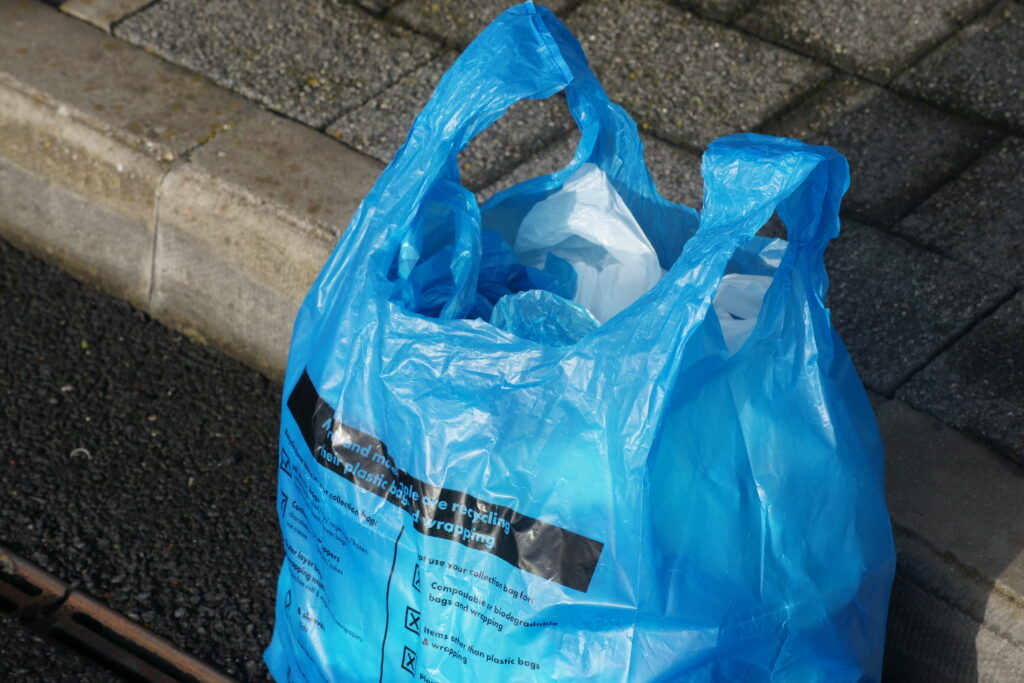
Dedicated bags and clear instructions
One key lesson from the FlexCollect Trials was the value of combining dedicated collection bags with clear communication. Residents were very responsive and participated in collections when they were supplied with the FlexCollect bags. The bags proved a strong alternative to a recycling bin because they are more cost-effective, take up less space, are easy for residents to store, and the bag itself can be recycled alongside its contents. Instructions enable residents to see what should and should not be included at the point of recycling, making correct separation easier and reducing uncertainty.
The results also demonstrate the potential benefits for material quality. FlexCollect’s interim findings showed that 90% of the collected material was recyclable, with contamination accounting for about 10%.
How Cromwell Flex Collect bags can help
FlexCollect showed that residents can respond positively to flexible plastic collections when the process is convenient and clearly explained.
The lesson is refreshingly straightforward.
Give people the right bag. Give them clear instructions. Make recycling easy.
As local authorities prepare for wider flexible plastic collections, Cromwell can help develop collection bags suited to the needs of individual schemes.
Planning a flexible plastic collection? Speak to Cromwell about Flex Collect bags and make it easier for residents to take part from day one.