Wales has become one of the world’s leading recycling nations, achieving a recycling rate of 68.4% in 2024 to 2025. More than half of Welsh local authorities have now exceeded the statutory 70% recycling target. This success has been driven by consistent policy, public engagement and well-designed collection systems.
As the UK prepares for kerbside flexible film collections from 2030, there are important lessons that can be learned from the Welsh approach.
Why Wales performs so well
Wales has focused heavily on source separated recycling systems, where materials are sorted by residents before collection. This approach reduces contamination and improves the quality of recyclable materials collected.
The Welsh Government’s Collections Blueprint has supported local authorities through clear guidance, long term planning and consistent recycling messaging. Combined with widespread food waste collections and strong public participation, this has helped create one of the highest performing recycling systems in the world.
By comparison, UK recycling rates overall remain significantly lower, sitting around the mid 40% range. So it would seem we need to take a leaf out of Wales’ book, especially as future collections are introduced.

Flexible film collection bag rollout is the next challenge
Flexible plastics such as bread bags, crisp packets, salad bags and multipack wrapping are becoming a major focus for local authorities ahead of the upcoming next phase of Simpler Recycling reforms.
These materials play an important role in protecting products and reducing food waste, but they can be difficult to recycle if collected incorrectly. Flexible films are particularly vulnerable to contamination from food residue and mixed materials.
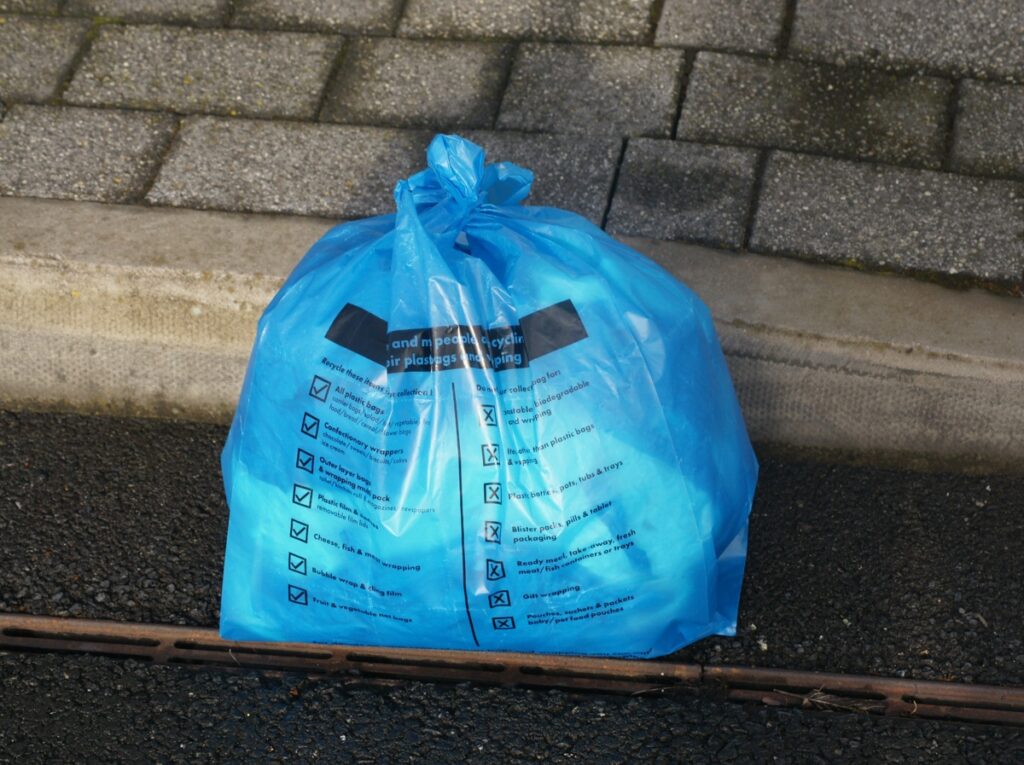
This makes collection quality essential, and, as such, it will become mandatory for local authorities as of April 2027. For many councils, this will be a brand new collection, and one that will likely differ from the rest, as it will likely be collected in Flex Collect bags rather than waste bins. So with new collections, new materials and new ways to collect, many councils may need extra help to manage this, and succeed. Luckily, we can take a leaf out of the Welsh Local Authorities’ books and learn from the leaders!
Early Welsh trials are showing positive results
Several Welsh local authorities have already started flexible plastic collection trials, including Swansea and the Vale of Glamorgan.
The Vale of Glamorgan trial has reportedly collected around three tonnes of soft plastics per week, supported by strong resident participation. Existing source separated recycling systems have helped residents adapt quickly to the new collections, while maintaining lower contamination levels.
These early results demonstrate the importance of clear communication and well structured collection systems when introducing flexible film recycling.
What local authorities can learn
As flexible film collections expand across the UK, the Welsh model highlights several important priorities:
Clear guidance for residents – Simple and consistent recycling instructions help reduce contamination and improve participation.
Consistent collection systems – Stable collection methods help residents build confidence and establish long term recycling habits.
Easy collection methods – provide residents with a bag to collect their waste, make it convenient for them
Focus on material quality – Source separated collections can help preserve the quality of flexible films and improve recycling outcomes.
Public engagement – Ongoing communication and education remain essential to successful recycling schemes.
Building a more resourceful recycling system
Flexible film collection bags present a major opportunity to improve resource management across the UK. However, successful recycling will depend not only on infrastructure, but also on collection design and public participation. Wales has shown that high recycling performance is achievable through long term planning, consistency and collaboration between local authorities and residents.
Cromwell Polythene is already supporting local authorities and waste management providers through solutions designed to improve the capture and separation of recyclable flexible films. Flex Collect bags have been developed specifically to support the efficient collection of flexible plastics, helping to reduce contamination and improve material quality throughout the recycling process. Designed for durability, practicality and ease of use, the bags can support kerbside collection schemes while encouraging greater public participation.
As flexible film collections expand across the UK, solutions such as FlexCollect will play an important role in helping local authorities build cleaner, more effective and more resourceful recycling systems that reflect the successes already being achieved in Wales.