A collection service can look excellent on paper. The real test comes when a resident fills a kitchen caddy, ties a refuse sack or presents their recycling for collection.
That is where the details matter. Are the instructions clear? Does the liner fit? Is the sack suitable for the waste it needs to contain?
The 2026 LARAC Conference provided plenty of useful discussion about improving food waste participation, understanding residents’ behaviour and making collection services work in practice. The Devon and Lincolnshire workshops offered particularly relevant lessons for authorities reviewing their collection arrangements.
At Cromwell, we were pleased to return as a LARAC partner, reconnect with Local Authorities and discuss their requirements for food waste caddy liners, refuse sacks, compactor sacks, wheelie bin liners and FlexCollect bags.
For those unable to attend, here are the collection themes worth taking back to your next service review.
Food waste collections: getting the caddy into regular use
Distributing a caddy is one thing. Getting it used regularly is another.
The Boosting Food Waste Recycling Participation: Lessons from Devon workshop explored how collection data could help identify households not using their food waste service. Smartwatch technology enabled crews to record information during their rounds, supporting targeted communication rather than relying entirely on a general campaign.
The interventions included “Missing Caddy” reminders and stickers placed across residual bin openings to prompt residents to use their food caddy. The results in the presentation reported an uplift of some homes receiving the specified interventions subsequently put out a food caddy.
For councils reviewing liner provision, the useful lesson could be to investigate practical barriers rather than assume another leaflet will solve everything.
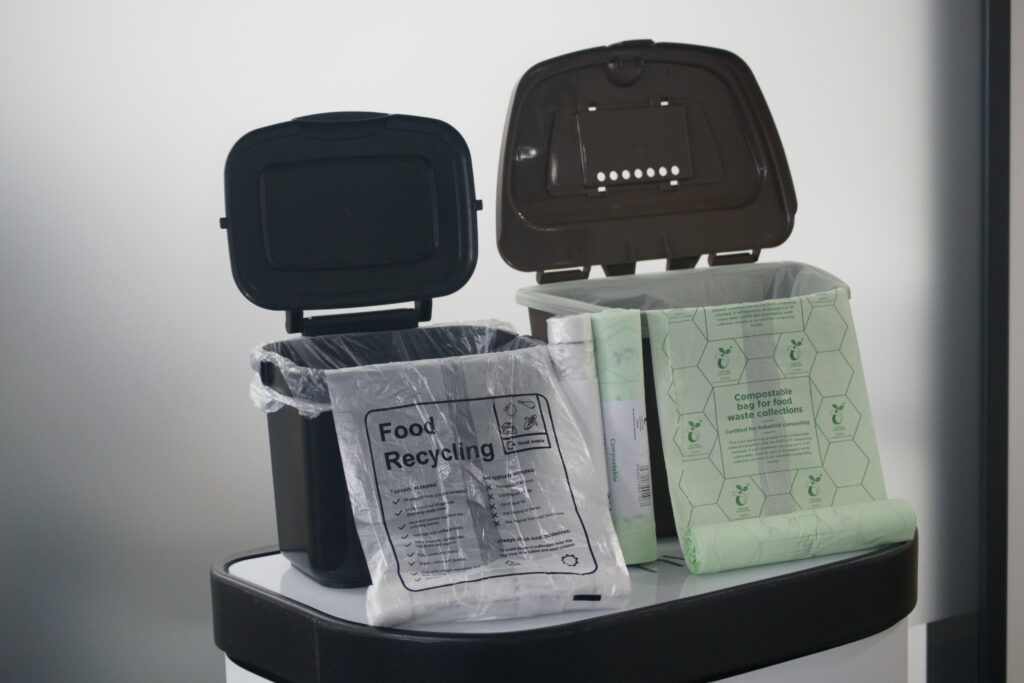
Choosing food waste liners for the whole collection system
The right liner needs to suit more than the kitchen.
The anaerobic digestion presentation considered several caddy lining options, including plastic and compostable liners. It also emphasised clear specifications and communication between councils and treatment operators.
For Cromwell, the procurement lesson is straightforward: match the liner to the collection and treatment arrangements, alongside the benefits to maximising participation rates by making food waste collection an easy and hassle-free experience.
Caddy dimensions, liner capacity, handling requirements and replacement arrangements also deserve attention before a specification is finalised.

Clear instructions are part of collection design
Lincolnshire’s Behaviour Change and Community Engagement workshop stressed the importance of understanding the cause of a problem, using evidence and avoiding assumptions. One exercise asked delegates to consider why residents might know about a food waste service but still choose not to use it.
Applied to sacks, bags and liners, this suggests a practical communications check.
Where collection products carry instructions, are those instructions consistent with the council’s website, leaflets and crew guidance? Do they explain what belongs in that particular collection, rather than offer a vague invitation to “recycle more”?
The bag, the leaflet and the website should tell the same story. Residents already have enough competing instructions in their lives.
Flexible plastics and FlexCollect bags
Alongside the seminar programme, flexible plastics and FlexCollect bags featured in conversations at our stand.
The practical question was how to make a collection arrangement straightforward for residents and workable for the authority delivering it.
For councils considering dedicated bags for flexible plastics, the discussion should start with the intended collection and sorting system. Bag capacity, dimensions, handling requirements and printed instructions can then be considered against that arrangement.
At Cromwell, our FlexCollect bags provide a relevant starting point for those specification discussions. However, the bag should be selected as part of the service, not treated as a substitute for planning it.
Before agreeing a specification, establish which materials residents should include, how they should present the filled bag and how it will be handled after collection.
A dedicated flexible plastics scheme should also be clearly distinguished from a general instruction to put all recycling into bags. The wording needs to describe the authority’s actual service, not leave residents to guess.
Turning LARAC 2026 discussions into practical improvements
The most useful conference lessons are the ones that lead to a better question back in the office.
Are residents clear about the service? Have practical barriers been investigated? Do collection products suit the containers, handling arrangements and receiving facility?
Those questions are directly relevant to the sacks, bags and liners that Cromwell supplies to local authorities.
Thank you to everyone who visited our stand and shared their experiences. We look forward to continuing those conversations and helping authorities review the collection materials their services require.
Contact Cromwell to discuss food waste caddy liners, refuse sacks, compactor sacks, wheelie bin liners and FlexCollect bags for your local authority’s collection services.
